
Spirituality vs. Religion: The Journey Within vs. The Path Without
- Victoria Chavez
- Oct 11, 2025
- 3 min read
Updated: Feb 21
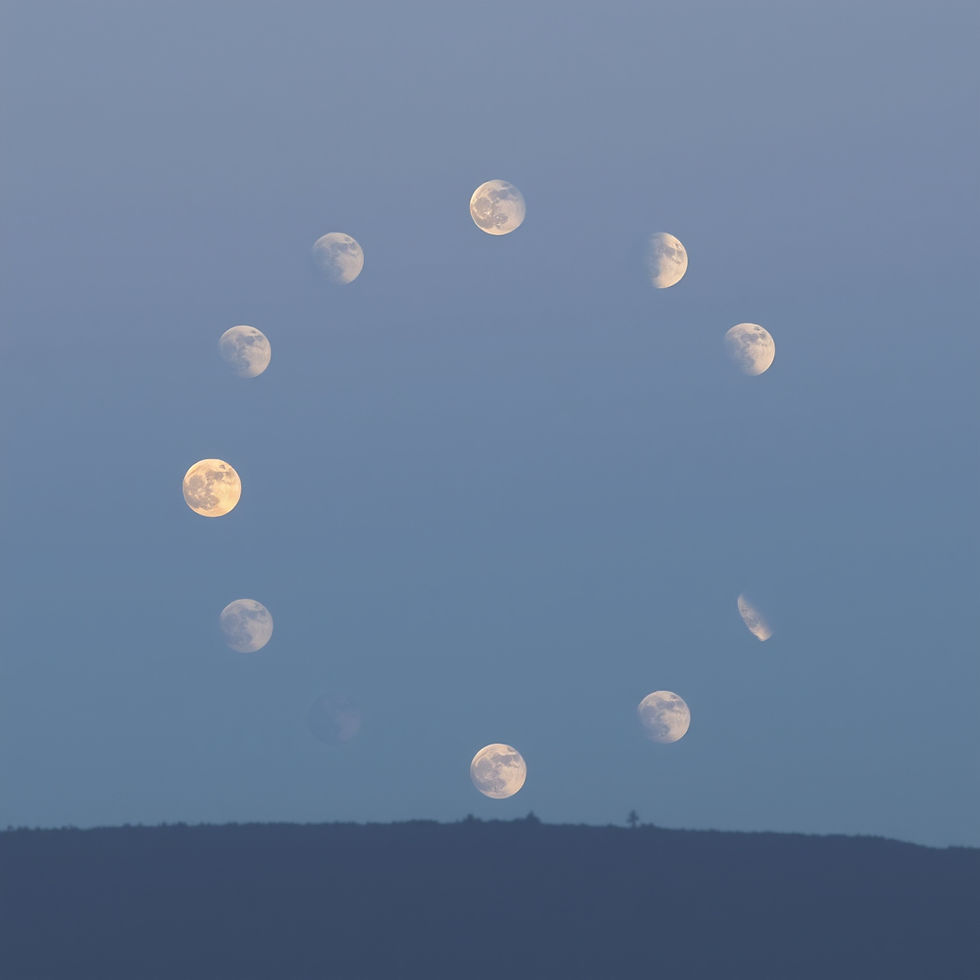
Human beings have always searched for meaning beyond the material world. From the earliest rituals honoring the moon's cycles to modern contemplative practices, the longing for connection with something greater than ourselves runs deep. Yet, in this quest, two words often surface side by side: spirituality and religion.
Though frequently used interchangeably, these concepts describe distinct but interconnected paths. Understanding their differences helps clarify how people cultivate faith, seek purpose, and find peace.
1. The Essence of Religion
Religion is an organized framework that unites people through shared beliefs, moral codes, and communal practices. It often includes sacred texts, rituals, and spiritual leaders who interpret divine principles.
Historically, religion provided stability and structure, guiding societies with ethical boundaries and shared narratives. It fosters a sense of belonging and community — a way to honor the sacred through collective expression.

In this sense, religion answers questions like:
Who are we?
Why are we here?
How should we live?
It provides a spiritual architecture — rules, traditions, and symbols — that help individuals navigate life’s uncertainties through faith and devotion.
2. The Essence of Spirituality
Spirituality, by contrast, is deeply personal. It is the individual’s experience of connection — to self, to others, to nature, or to the universe itself focuses less on structure and more on experience, emphasizing awareness, consciousness, and inner peace.
Spirituality asks:
What do I feel to be true?
How do I connect with something beyond myself?
What is the nature of my inner world?
Unlike religion, spirituality has no fixed boundaries. It evolves with personal understanding and can exist both within and outside formal faith systems. A person may identify as religious, spiritual, both, or neither — yet still engage in deep reflection and reverence for life.
3. Comparing the Two Paths
Aspect | Religion | Spirituality |
Focus | Organized belief system | Personal experience and awareness |
Authority | Based on scripture, doctrine, and clergy | Based on intuition and direct experience |
Goal | Salvation or obedience to divine law | Self-realization and unity with the universe |
Community Role | Shared worship and tradition | Individual exploration and inner connection |
Expression | Rituals, prayer, collective faith | Meditation, mindfulness, self-reflection |
View of the Divine | Often external (God, deity) | Often internal (divine within) |
While religion offers the security of shared truth, spirituality invites the freedom to seek one’s own understanding.
4. The Psychological Perspective
From a psychological standpoint, both religion and spirituality fulfill human needs for meaning and purpose.
Religion often provides structure, moral guidance, and a sense of community belonging, offering comfort in times of fear or loss.
Spirituality nurtures inner awareness, growth, and authenticity, encouraging mindfulness, compassion, and emotional healing.
5. Intersection and Integration
Religion and spirituality need not compete. Many individuals blend both — practicing a faith tradition while also seeking personal connection through meditation, contemplation, or creative expression.
Integration occurs when structured beliefs meet lived experiences. A religious person can deepen their spirituality by cultivating awareness beyond doctrine, while a spiritual seeker can benefit from the moral foundation and community support religion provides.
When practiced consciously, both can support mental health by fostering gratitude, reducing stress, and strengthening resilience.
6. The Modern Shift
In today’s world, more people identify as “spiritual but not religious.” This movement reflects a desire for connection without institutional boundaries. Rather than rejecting religion outright, many seek universal values — compassion, kindness, and mindfulness — as expressions of spiritual truth.
This shift mirrors humanity’s broader evolution: moving from external authority to internal awareness, from dogma to direct experience.
7. In the End, Both Seek the Same Source
Whether one prays in a sacred space or meditates under the open sky, both paths share a familiar longing — to know the divine, to feel peace, and to live with meaning.

Religion is the map; spirituality is the journey. One offers guidance; the other invites discovery. Both, when approached with sincerity, lead toward the same light.
Spirituality and religion are not opposites but reflections of humanity’s ongoing search for truth. Religion offers roots — shared wisdom passed through generations. Spirituality offers wings — the freedom to explore the infinite within. Together, they remind us that the sacred is both around us and inside us, waiting to be remembered.
Suggested PureLife Products for Spiritual Alignment
Holistica™ Chakra Roll-Ons – Balance emotional and spiritual energy.
Ancestral Apothecary Oracle Deck –(coming soon) Connect with inner wisdom and intuition.
Calming Herbal Tea Blends – (coming soon) Restore peace to mind and spirit.
Zen Bath & Body Oils – Cleanse and Recharge Your Aura.


Comments